RESEARCH GUIDE
What is Retatrutide? A Research Overview
Introduction
Retatrutide (LY3437943) is a novel investigational peptide that has generated significant interest in the research community as the first triple-agonist compound targeting three distinct incretin and metabolic receptors simultaneously. Unlike earlier single- or dual-agonist peptides, retatrutide activates the glucagon-like peptide-1 (GLP-1), glucose-dependent insulinotropic polypeptide (GIP), and glucagon receptors, representing a new frontier in metabolic pathway research.
Molecular Profile
Retatrutide is a synthetic peptide with a molecular weight of approximately 4113.58 Da and a CAS registry number of 2381089-83-2. It is a 39-amino acid peptide conjugated to a fatty acid moiety that extends its half-life, enabling less frequent administration in research protocols. The molecular design incorporates agonist activity at all three target receptors through carefully engineered sequence modifications derived from the native GIP peptide backbone.
Triple-Agonist Mechanism
What distinguishes retatrutide from other peptides in this research space is its simultaneous activation of three receptor pathways. The GLP-1 receptor pathway has been extensively studied for its role in glucose homeostasis and feeding behavior signaling. The GIP receptor pathway is involved in nutrient-stimulated insulin secretion and lipid metabolism. The glucagon receptor pathway contributes to hepatic glucose output, lipid oxidation, and energy expenditure. Research suggests that the combined activation of all three pathways may produce effects that exceed what is observed with single- or dual-agonist compounds.
Published Research
The TRIUMPH-2 Phase 2 clinical trial, published in the New England Journal of Medicine, evaluated retatrutide across multiple research cohorts. Studies indicate that participants in the highest-evaluated groups demonstrated substantial changes in biochemical parameters over a 48-week period. These findings have been widely cited in the research community as evidence of the multi-pathway activation hypothesis.
Additional preclinical research has examined retatrutide's effects on hepatic lipid content, with studies observing significant reductions in liver fat percentage. Researchers have noted that the glucagon receptor component may be particularly relevant to these hepatic observations, as glucagon signaling has been associated with lipid mobilization and oxidation in published literature.
Why Researchers Are Interested
As the first triple-agonist peptide to reach advanced clinical evaluation, retatrutide represents an entirely new class of research compound. The ability to modulate three metabolic pathways simultaneously offers researchers a unique tool for studying the interplay between incretin signaling, glucagon biology, and energy metabolism. The compound's extended pharmacokinetic profile also makes it practical for longitudinal research designs.
Storage and Handling
Retatrutide is supplied as a lyophilized (freeze-dried) powder for maximum stability. For long-term storage, the compound should be maintained at -20°C in a dry environment. Once reconstituted with bacteriostatic water, the solution should be stored at 2–8°C and used within a reasonable timeframe. Avoid repeated freeze-thaw cycles, as this may compromise peptide integrity. Researchers should handle the compound following standard laboratory protocols for peptide reagents.
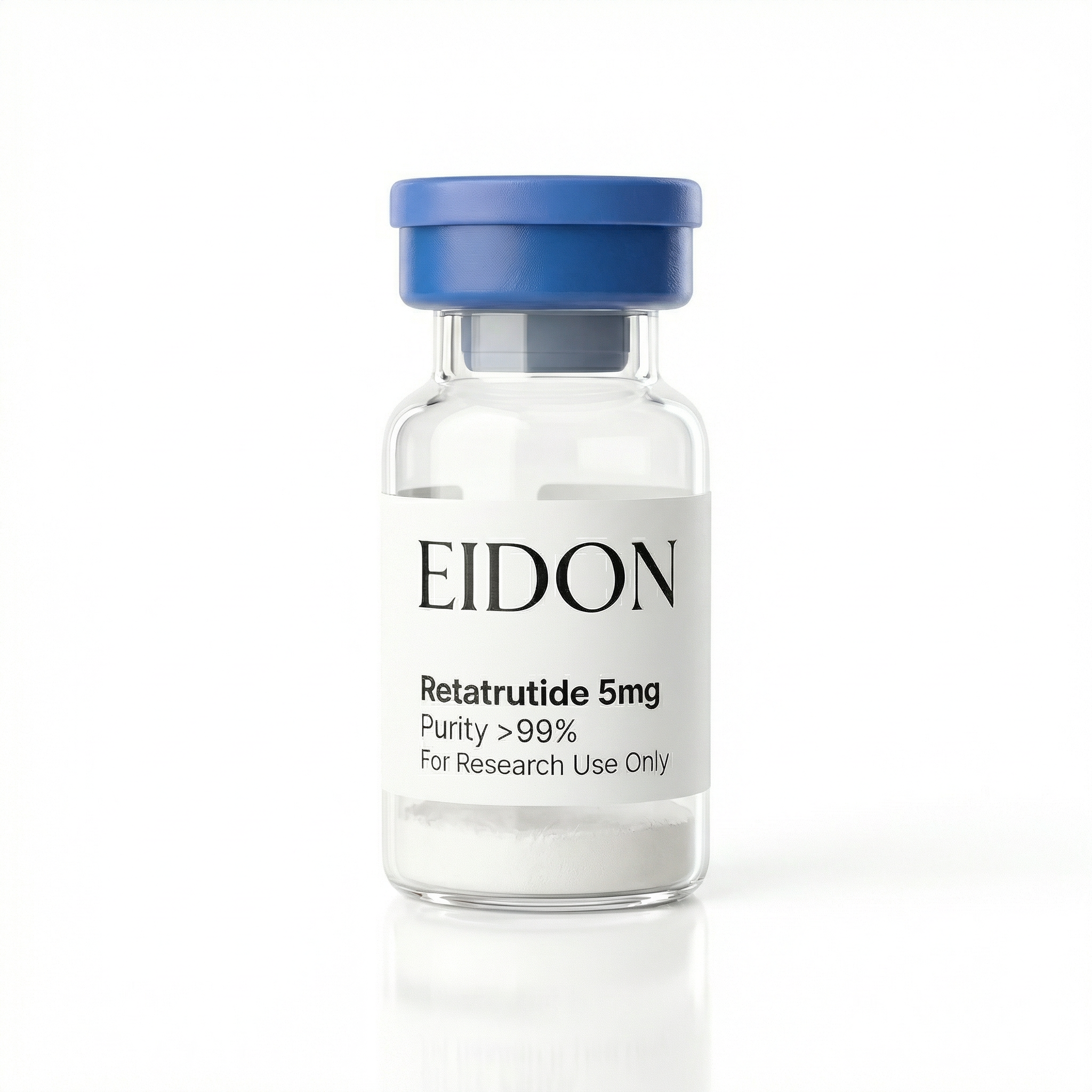
Retatrutide 5mg
Research-grade retatrutide, >99% purity, third-party tested via HPLC at Janoshik Analytical.
View ProductDisclaimer: For research use only. Not for human consumption. This article is provided for educational and informational purposes. It is not intended to diagnose, treat, cure, or prevent any disease. Must be 21+ to order.