RESEARCH GUIDE
GHK-Cu: The Copper Peptide Research Guide
Introduction to GHK-Cu
GHK-Cu (glycyl-L-histidyl-L-lysine:copper(II)) is a naturally occurring copper-binding tripeptide first identified in human plasma in 1973. With a molecular weight of 403.93 Da and CAS number 49557-75-7, this small peptide-copper complex has become one of the most extensively studied compounds in tissue remodeling and regeneration research. Its discovery originated from observations that plasma from younger individuals promoted more robust cellular activity in vitro than plasma from older subjects.
Natural Occurrence and Age-Related Decline
GHK-Cu is present in human plasma, saliva, and urine under normal physiological conditions. Research has documented that circulating levels of GHK-Cu decrease significantly with age — studies indicate concentrations of approximately 200 ng/mL at age 20, declining to roughly 80 ng/mL by age 60. This age-related decline has led researchers to investigate whether diminished GHK-Cu availability correlates with observable changes in tissue maintenance and repair capacity.
Copper Binding and Molecular Activity
The copper(II) ion bound within the GHK tripeptide structure is central to the compound's biological activity. The peptide backbone coordinates copper through nitrogen and oxygen donor atoms, creating a stable complex that can deliver bioavailable copper to cellular environments. Published research suggests that this copper delivery mechanism may influence a wide range of enzymatic processes, including those involved in collagen cross-linking (lysyl oxidase), antioxidant defense (superoxide dismutase), and extracellular matrix remodeling.
Research Areas
The breadth of GHK-Cu research spans multiple fields. In tissue repair signaling studies, GHK-Cu has been observed to stimulate collagen synthesis, decorin production, and angiogenesis in experimental models. Research on dermal tissue biology has demonstrated effects on dermal fibroblast proliferation and extracellular matrix protein expression. Hair follicle studies suggest that GHK-Cu may influence the follicle growth cycle, with researchers observing effects on follicle size and proliferative activity in tissue culture models.
Perhaps most notably, gene expression studies have indicated that GHK-Cu may modulate the activity of a large number of human genes. Research published in genomics journals has reported that GHK-Cu can reset gene expression patterns associated with tissue damage, upregulating genes involved in repair processes while downregulating those associated with inflammation and tissue degradation. These findings have positioned GHK-Cu as a compound of significant interest in regenerative biology research.
Anti-Inflammatory Properties
Multiple studies have examined GHK-Cu's relationship with inflammatory mediators. Research suggests the peptide may modulate the expression of pro-inflammatory cytokines including TNF-alpha, IL-6, and TGF-beta in certain experimental contexts. These anti-inflammatory observations have been noted in both cell culture and animal model research, contributing to the compound's relevance across tissue repair signaling, dermatological, and tissue engineering research applications.
Storage and Handling
GHK-Cu is supplied as a lyophilized powder with a characteristic blue-green coloration due to the copper ion. For optimal stability, store at -20°C in a sealed container protected from light and moisture. Once reconstituted, the solution should be refrigerated at 2–8°C and used promptly. As with all research peptides, avoid repeated freeze-thaw cycles and handle under standard laboratory conditions.
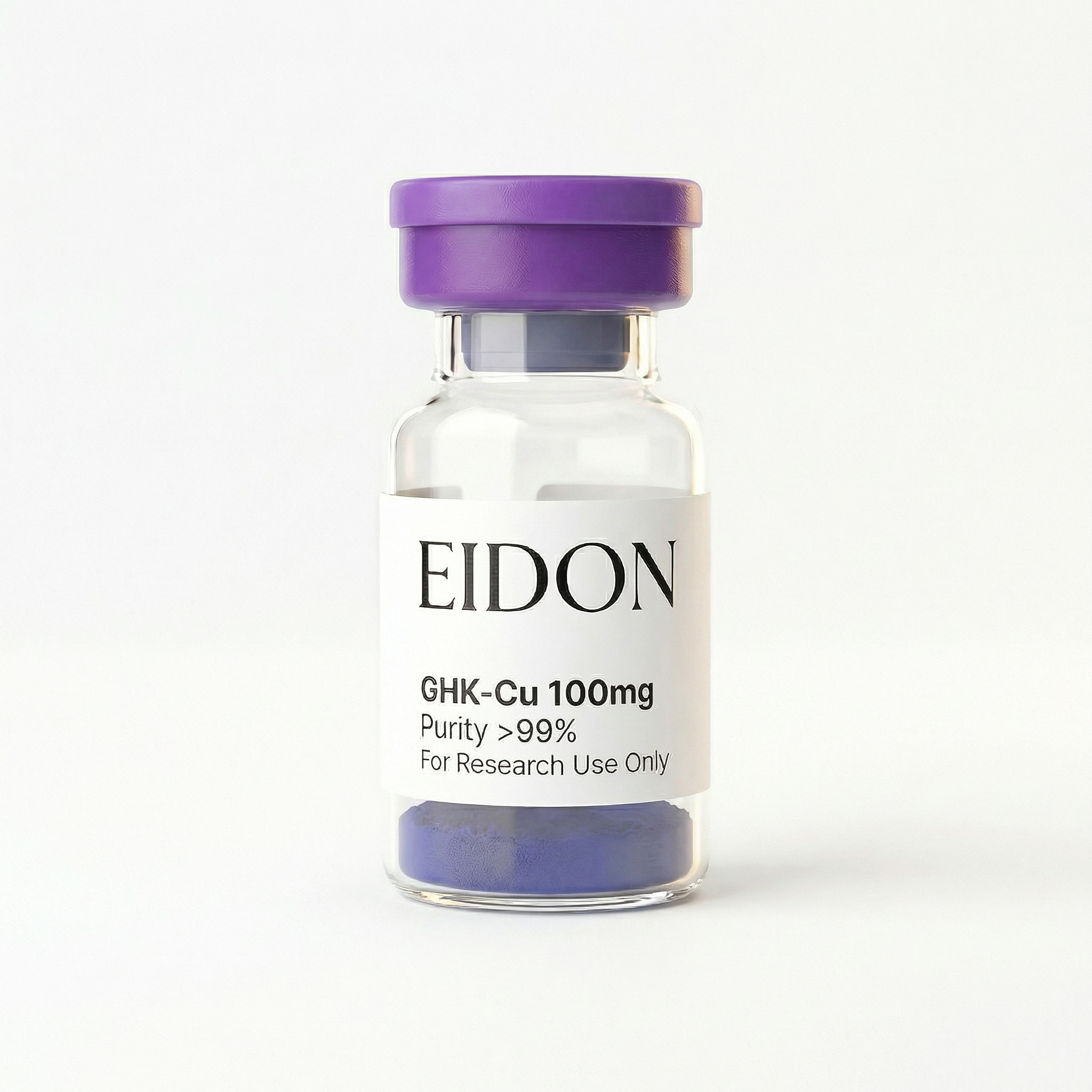
GHK-Cu 100mg
Research-grade GHK-Cu, >99% purity, third-party tested via HPLC at Janoshik Analytical.
View ProductDisclaimer: For research use only. Not for human consumption. This article is provided for educational and informational purposes. It is not intended to diagnose, treat, cure, or prevent any disease. Must be 21+ to order.